
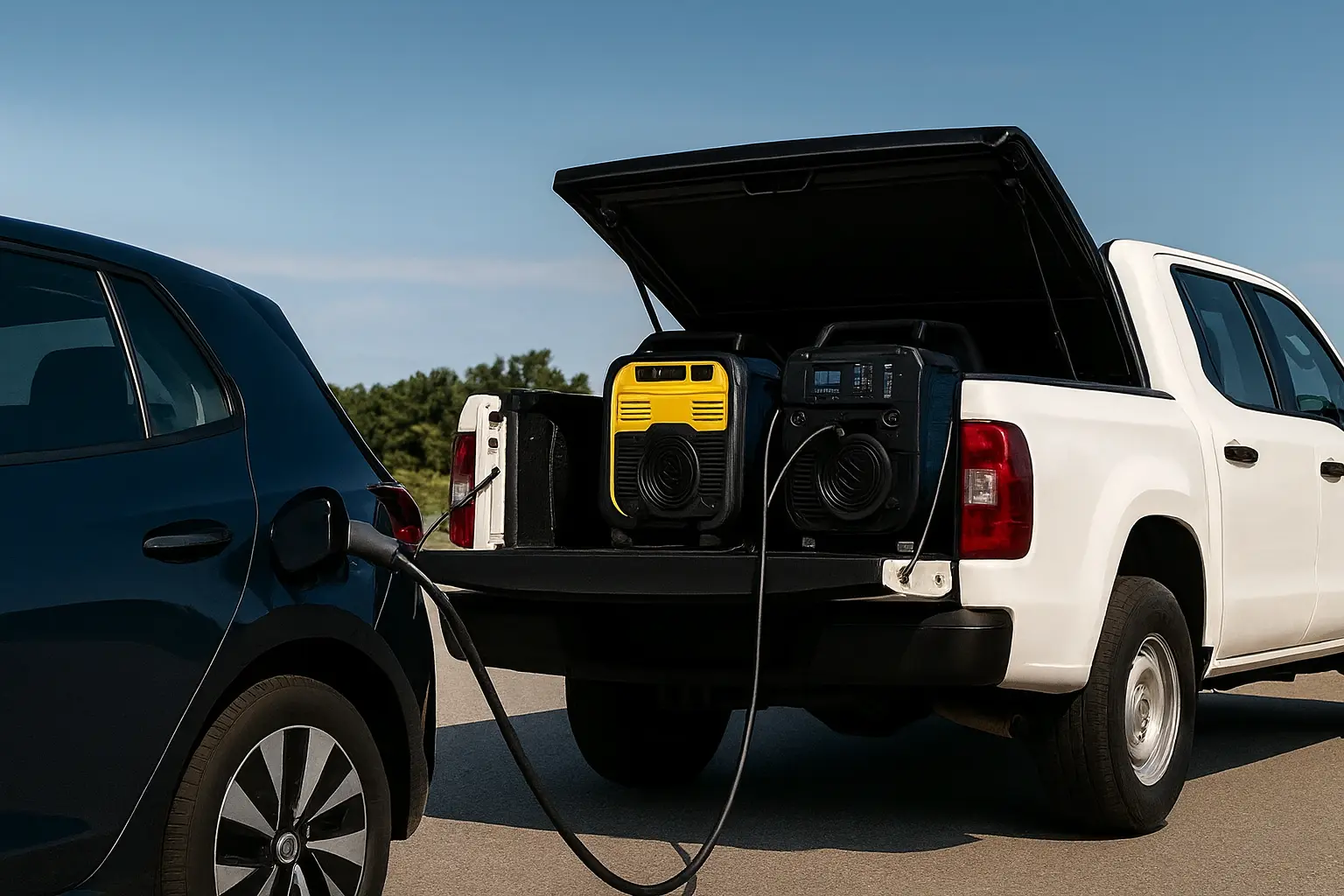
As electric vehicles (EVs) become the norm, charging solutions must evolve. While home and public charging are growing, they don’t cover every scenario. This is where portable EV charging stations come in—offering drivers the flexibility to charge anytime, anywhere.
Portable EV chargers act as a safety net for EV drivers—whether on a road trip, camping, or in an emergency when no station is nearby. In this post, we’ll break down everything you need to know about portable EV charging stations in 2025.
What Are Portable EV Charging Stations?
Portable EV charging stations are compact, mobile devices designed to deliver electricity to your EV without relying on fixed infrastructure.
Unlike home wall units or public charging points, portable stations are:
-
Lightweight and mobile – carry them in your trunk.
-
Plug-and-play – connect to outlets or built-in batteries.
-
Flexible – work at home, work, or off-grid.
Types of Portable EV Charging Stations
1. Plug-In Portable Chargers
-
Connect to standard 120V outlets (Level 1).
-
Add ~3–5 miles of range per hour.
-
Affordable and compact.
2. Portable Level 2 Chargers
-
Plug into 240V outlets.
-
Add 20–30 miles of range per hour.
-
Best balance of portability and speed.
3. Battery-Powered Portable Chargers
-
Function like a power bank for your EV.
-
Provide 10–40 miles of emergency range.
-
Ideal for off-grid use, camping, or emergencies.
How Portable EV Charging Stations Work
-
Plug into a power source (outlet, generator, or solar).
-
Connect the charging cable to your EV.
-
Adjust power settings if available.
-
Monitor charging via built-in display or smartphone app.
Advanced models include:
-
Safety features (overcurrent, overheat protection).
-
Smart app connectivity.
-
Adapters for all EV models.
Benefits of Portable EV Charging Stations
-
🚗 Emergency Backup – Never fear being stranded.
-
🌍 Travel Freedom – Ideal for camping, rural trips, and road adventures.
-
💰 Cost Savings – Avoids expensive towing when your EV dies.
-
🔌 Versatility – Works with Tesla, Rivian, Nissan, Chevy, Ford, and more.
-
🏡 Home Convenience – Use as an extra charger without installing infrastructure.
Limitations of Portable EV Charging Stations
-
⚡ Slower charging than public DC fast chargers.
-
💸 Higher upfront cost (especially battery-powered).
-
⚖️ Bulky units may not fit easily in small EVs.
Portable vs Home vs Public Charging
| Feature | Portable EV Charger | Home Charging | Public Station |
|---|---|---|---|
| Cost | $300–$2000 | $500–$1500 install | $10–$30/session |
| Speed | 3–30 miles/hour | 20–30 miles/hour | 60–100 miles/30 min |
| Mobility | High | Fixed at home | Fixed station |
| Best For | Emergencies, travel | Daily charging | Long trips |
Costs of Portable EV Charging Stations
-
Entry-Level (Level 1): $300–$500
-
Portable Level 2: $500–$900
-
Battery-Powered Stations: $1000–$2000+
Extra costs:
-
Adapters
-
Solar add-ons for off-grid use
Who Should Buy Portable EV Charging Stations?
-
Daily commuters – as a backup safety option.
-
Frequent travelers – long trips, camping, or remote routes.
-
Fleet operators – provide emergency charging to drivers.
-
EV rental companies – ensure customers don’t get stranded.
Portable EV Charging vs Mobile EV Charging Services
-
Portable Stations – Owned by the driver, carried in the vehicle. Great for independence.
-
Mobile EV Charging (Roadside Services) – Companies like Fast Track Towing deliver power via charging vans. Faster, higher-powered, and available when you don’t have a portable charger.
Together, they provide complete EV security.
Future of Portable EV Charging Stations
By 2030, expect:
-
Ultra-fast portable units with solid-state batteries.
-
Solar-charged packs for off-grid freedom.
-
Wider adoption as EV sales grow.
Portable stations will move from “backup” to everyday essentials.
Frequently Asked Questions (FAQs)
Q1. Can portable EV charging stations fully charge a car?
Most are designed for partial charges or emergency range boosts, not full charges.
Q2. Are portable EV chargers safe?
Yes, quality models include safety features like surge and overheat protection.
Q3. Do Teslas work with portable chargers?
Yes—with the correct Tesla adapter.
Q4. How long do portable EV chargers take?
Level 1 adds ~3–5 miles/hour, Level 2 adds ~20–30 miles/hour.
Q5. Do I need one if I live in San Diego?
Yes. Even with hundreds of charging stations, a portable station adds peace of mind—especially during peak demand or travel.
Conclusion: Portable EV Charging Stations = EV Freedom
Portable EV charging stations give drivers control, flexibility, and peace of mind. Whether you’re on a long road trip, commuting daily, or just want backup in case of emergencies, these devices are a smart investment for 2025 and beyond.
When combined with mobile roadside EV charging services, drivers in San Diego and beyond can enjoy total confidence that they’ll never be stranded.
📞 Call Fast Track Towing San Diego today to learn more about EV roadside charging and towing services—your backup when portable charging isn’t enough.